
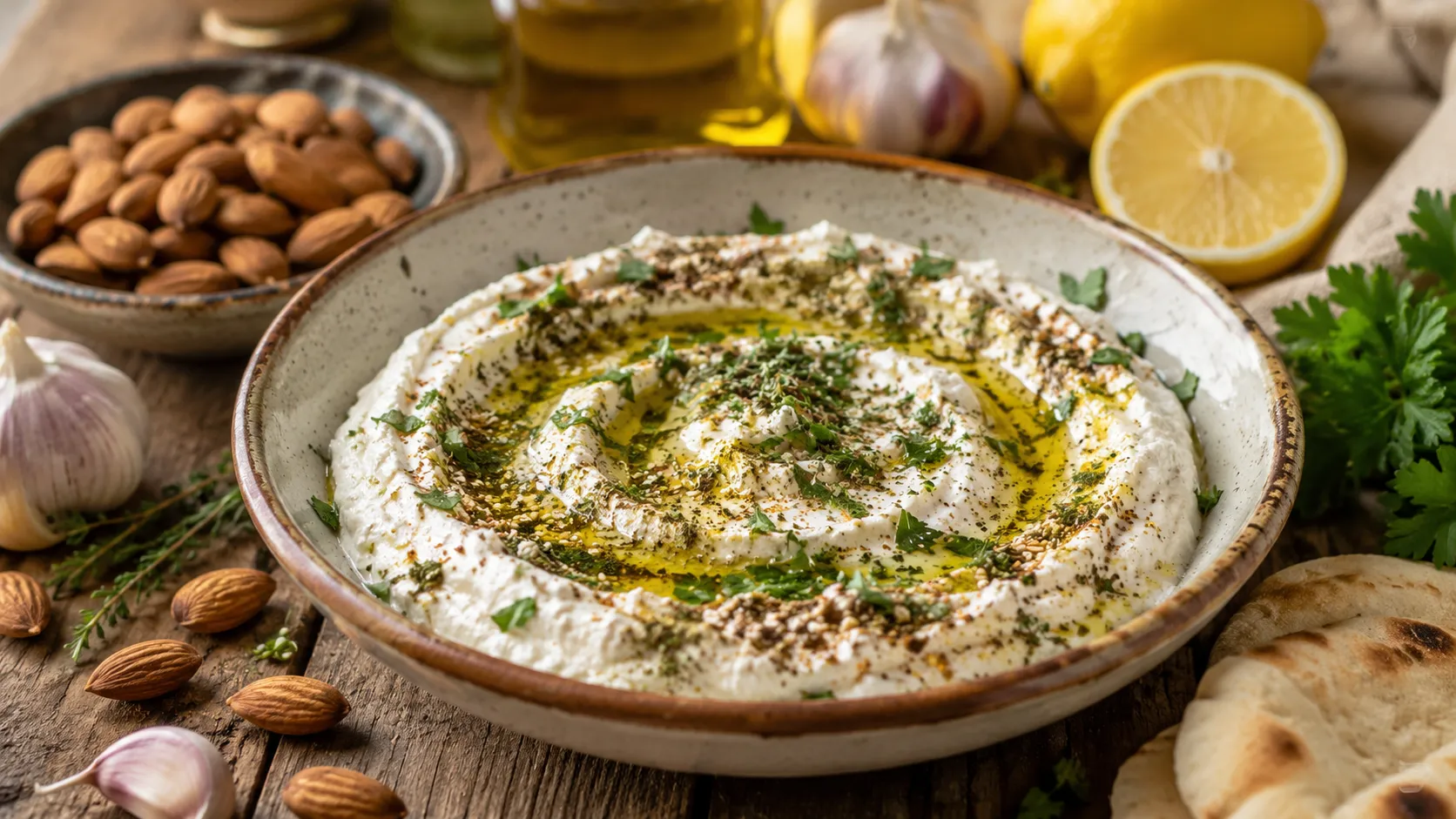
Vegan Labneh with Soy or Almond Yogurt is a creamy, tangy, dairy-free spread that feels surprisingly luxurious despite its simple ingredients. The first spoonful is smooth, rich, and satisfying, making it hard to believe it’s completely plant-based.
This recipe transforms ordinary vegan yogurt into a thick, spreadable cheese-like dip that works beautifully for breakfast, snacks, appetizers, or mezze platters. What makes it special is the straining process, which concentrates the flavor and creates a velvety texture similar to traditional labneh.
In my experience, homemade vegan labneh tastes fresher and more flavorful than many store-bought alternatives. Whether you’re vegan, dairy-free, or simply looking for new Mediterranean-inspired recipes, this easy recipe delivers impressive results with minimal effort and beginner-friendly ingredients.
Why You’ll Love This Recipe
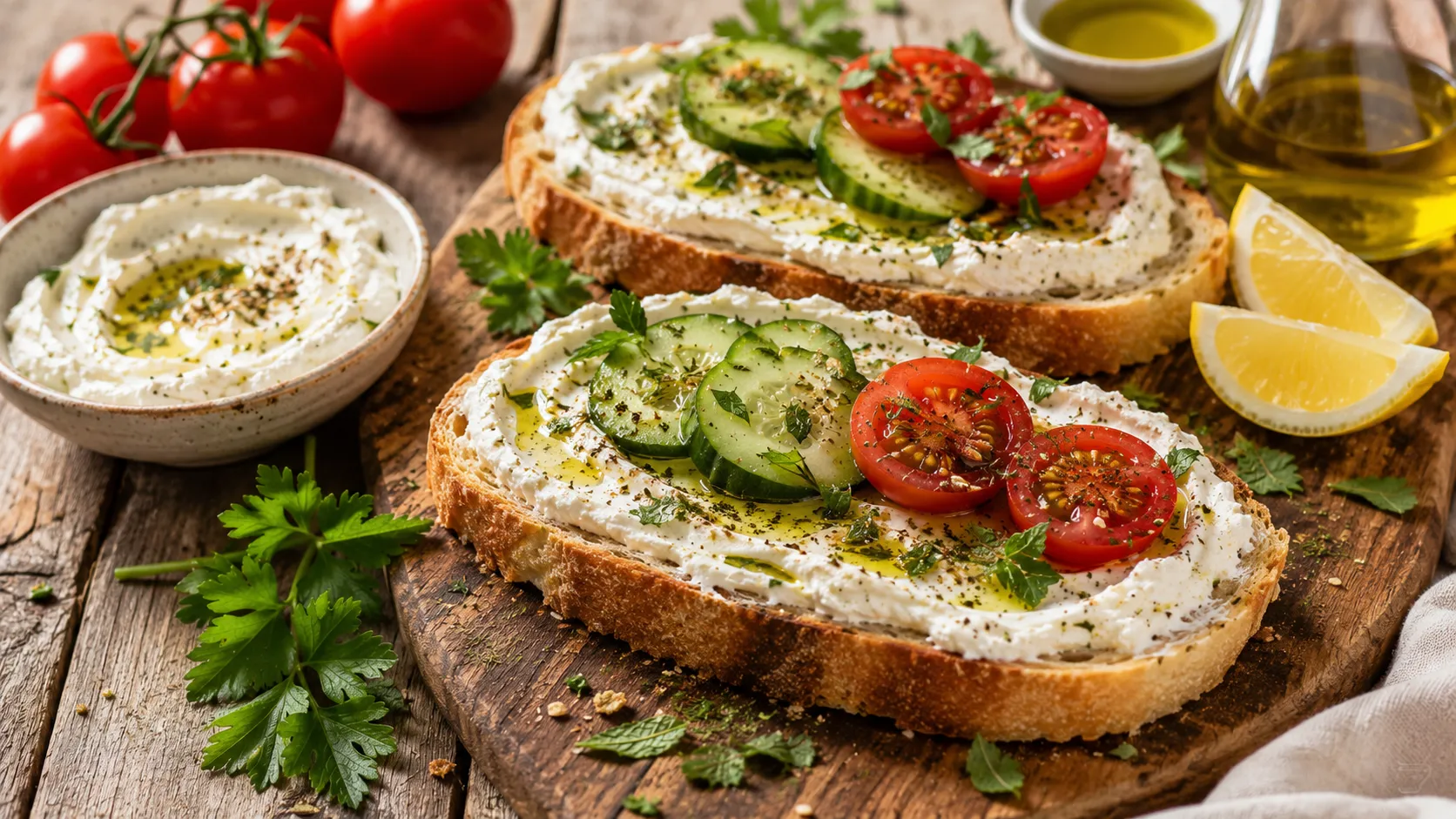
This vegan labneh recipe is wonderfully simple while delivering rich Mediterranean flavor. The texture becomes thick, creamy, and luxurious after straining, making it perfect for spreading, dipping, or serving alongside fresh vegetables.
You’ll love that it requires only a few ingredients and very little hands-on work. The refrigerator does most of the magic for you. I’ve noticed that soy yogurt creates a slightly richer result, while almond yogurt offers a lighter, delicate flavor.
It’s naturally dairy-free, versatile, and customizable with herbs, spices, or olive oil toppings. Whether you’re preparing a healthy snack or building a beautiful mezze platter, this recipe feels special without being complicated.
Ingredients
- 2 cups plain unsweetened soy yogurt
- 2 cups plain unsweetened almond yogurt
- 1 teaspoon sea salt
- 1 tablespoon extra virgin olive oil
- 1 teaspoon lemon juice
- 1 small garlic clove, finely grated
- 1 teaspoon za’atar seasoning
- 1 tablespoon chopped fresh parsley
- 1 tablespoon chopped fresh dill
- Freshly cracked black pepper to taste
How to Make It
Step 1
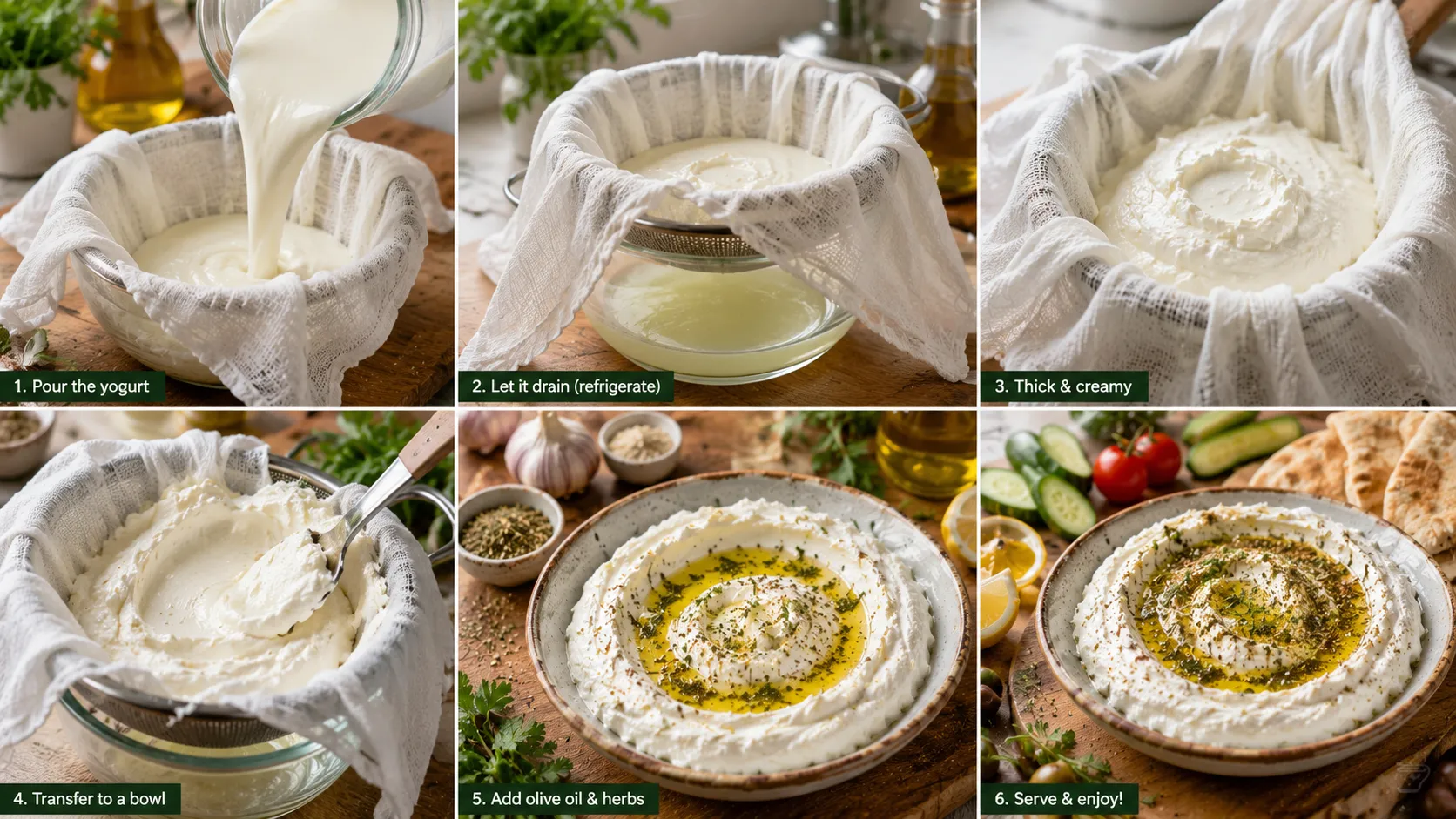
Start by selecting a high-quality unsweetened soy or almond yogurt. The thicker the yogurt, the better your final labneh will become. Place a fine mesh strainer over a large bowl and line it with cheesecloth, a nut milk bag, or a clean kitchen towel. Stir the salt into the yogurt before transferring it into the lined strainer. This simple step helps enhance flavor while encouraging excess moisture to drain away during the straining process. Make sure the bowl underneath has enough space to catch the liquid that will slowly separate from the yogurt.
Step 2
Carefully spoon the yogurt mixture into the prepared cheesecloth-lined strainer. Spread it gently into an even layer without pressing down too firmly. Fold the edges of the cloth over the top to protect the yogurt while it chills. Place the entire setup into the refrigerator and allow it to strain undisturbed. During this time, the yogurt gradually loses moisture and becomes thicker. I’ve noticed that patience is important here because rushing the process can leave the labneh too soft and less creamy than desired.
Step 3
Allow the yogurt to strain for at least 12 hours. For a thicker, more traditional texture, leave it for 18 to 24 hours. Check occasionally to see how much liquid has collected in the bowl below. The longer it strains, the firmer and richer the labneh becomes. If you prefer a spreadable consistency for sandwiches or toast, 12 hours may be enough. For dipping platters and appetizer boards, the longer straining period usually creates a more satisfying texture that holds its shape beautifully.
Step 4
Once the yogurt has reached your desired consistency, carefully remove it from the refrigerator. Open the cheesecloth and transfer the thickened labneh into a clean mixing bowl. You should notice a dramatic change in texture. It will look creamy, dense, and similar to soft cheese. Stir gently to smooth it out. At this stage, you can taste and adjust the seasoning if needed. A small pinch of extra salt often enhances the flavor even further without overpowering the natural tanginess.
Step 5
Add the lemon juice and grated garlic to the thickened labneh. Stir until everything is evenly incorporated. The lemon brightens the flavor while the garlic adds subtle savory depth. Mix gently to preserve the silky texture. In my experience, fresh garlic creates the best flavor, but it should be used sparingly so it doesn’t dominate the delicate yogurt taste. This combination creates a balanced spread that pairs beautifully with vegetables, crackers, pita bread, and grain bowls.
Step 6
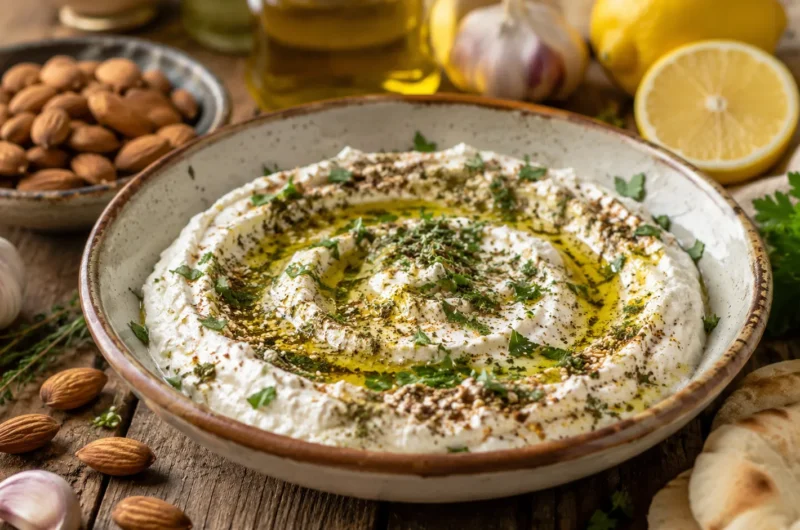
Transfer the finished labneh to a serving bowl and smooth the surface with the back of a spoon. Create a shallow swirl on top to hold the olive oil. Drizzle generously with extra virgin olive oil and sprinkle with za’atar seasoning, parsley, dill, and freshly cracked black pepper. These simple toppings transform the appearance and add layers of flavor. The contrast between creamy labneh, fragrant herbs, and rich olive oil creates an inviting presentation that feels restaurant-worthy while remaining easy to prepare at home.
Step 7
Serve immediately or refrigerate for an hour before serving if you prefer a firmer texture. Pair it with warm pita bread, fresh cucumbers, carrots, cherry tomatoes, or crackers. The chilled labneh develops even deeper flavor as it rests. I’ve tried serving it as part of a Mediterranean mezze board, and it always disappears quickly. The creamy texture and tangy flavor make it a crowd-pleasing addition to gatherings, meal prep lunches, and healthy snack platters throughout the week.
Cooking Tips / Variations
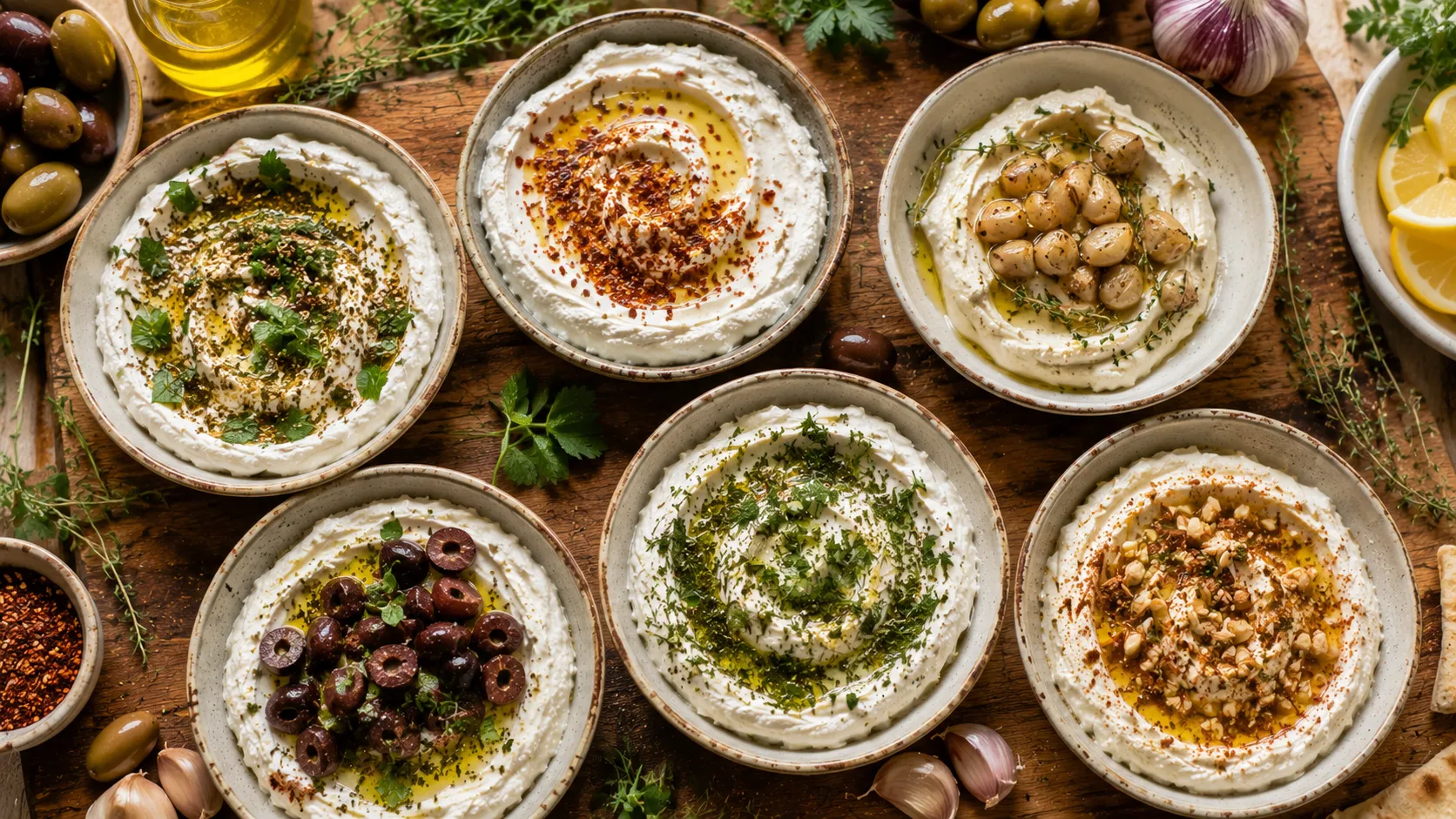
The type of yogurt you choose can significantly affect the final result. Soy yogurt generally produces a richer and thicker labneh, while almond yogurt creates a lighter texture.
For extra flavor, try mixing in roasted garlic, chopped chives, fresh mint, or crushed pink peppercorns. A pinch of smoked paprika also adds depth. If your yogurt seems thin, extend the straining time by a few hours.
I’ve seen this work well with cashew yogurt too, creating an exceptionally creamy texture. Avoid sweetened yogurts, as they can alter the traditional savory flavor profile and affect the overall balance of the recipe.
Serving or Storage Tips
Vegan labneh is incredibly versatile and can be served in many ways. Spread it on toast, use it as a sandwich filling, serve it with pita chips, or include it on a mezze platter alongside vegetables and olives.
Store leftovers in an airtight container in the refrigerator for up to five days. A thin layer of olive oil on top helps maintain freshness and prevents drying. I’ve noticed the flavor often improves after a day as the seasonings blend together. Stir gently before serving again and add fresh herbs if needed to refresh the presentation.
Conclusion
Vegan Labneh with Soy or Almond Yogurt is proof that simple ingredients can create something truly delicious. The creamy texture, tangy flavor, and beautiful Mediterranean presentation make it a recipe worth adding to your regular rotation.
Whether you’re serving it as a healthy snack, appetizer, or part of a larger meal, this dairy-free spread delivers impressive flavor with very little effort. Save this recipe on Pinterest so it’s easy to find whenever you’re craving a fresh homemade dip.
Try it in your own kitchen, share it with family and friends, and enjoy the satisfaction of creating a wholesome plant-based favorite from scratch. Happy cooking!
Vegan Labneh with Soy or Almond Yogurt
6
servings15
minutes15
minutesThis creamy Vegan Labneh with Soy or Almond Yogurt transforms simple dairy-free yogurt into a rich, tangy Mediterranean-style spread that’s perfect for dipping, spreading, and sharing.
Ingredients
2 cups plain unsweetened soy yogurt
2 cups plain unsweetened almond yogurt
1 teaspoon sea salt
1 tablespoon extra virgin olive oil
1 teaspoon lemon juice
1 small garlic clove, finely grated
1 teaspoon za’atar seasoning
1 tablespoon chopped fresh parsley
1 tablespoon chopped fresh dill
Freshly cracked black pepper to taste
How to Make it
- Start by selecting a high-quality unsweetened soy or almond yogurt. The thicker the yogurt, the better your final labneh will become. Place a fine mesh strainer over a large bowl and line it with cheesecloth, a nut milk bag, or a clean kitchen towel. Stir the salt into the yogurt before transferring it into the lined strainer. This simple step helps enhance flavor while encouraging excess moisture to drain away during the straining process. Make sure the bowl underneath has enough space to catch the liquid that will slowly separate from the yogurt.
- Carefully spoon the yogurt mixture into the prepared cheesecloth-lined strainer. Spread it gently into an even layer without pressing down too firmly. Fold the edges of the cloth over the top to protect the yogurt while it chills. Place the entire setup into the refrigerator and allow it to strain undisturbed. During this time, the yogurt gradually loses moisture and becomes thicker. I’ve noticed that patience is important here because rushing the process can leave the labneh too soft and less creamy than desired.
- Allow the yogurt to strain for at least 12 hours. For a thicker, more traditional texture, leave it for 18 to 24 hours. Check occasionally to see how much liquid has collected in the bowl below. The longer it strains, the firmer and richer the labneh becomes. If you prefer a spreadable consistency for sandwiches or toast, 12 hours may be enough. For dipping platters and appetizer boards, the longer straining period usually creates a more satisfying texture that holds its shape beautifully.
- Once the yogurt has reached your desired consistency, carefully remove it from the refrigerator. Open the cheesecloth and transfer the thickened labneh into a clean mixing bowl. You should notice a dramatic change in texture. It will look creamy, dense, and similar to soft cheese. Stir gently to smooth it out. At this stage, you can taste and adjust the seasoning if needed. A small pinch of extra salt often enhances the flavor even further without overpowering the natural tanginess.
- Add the lemon juice and grated garlic to the thickened labneh. Stir until everything is evenly incorporated. The lemon brightens the flavor while the garlic adds subtle savory depth. Mix gently to preserve the silky texture. In my experience, fresh garlic creates the best flavor, but it should be used sparingly so it doesn’t dominate the delicate yogurt taste. This combination creates a balanced spread that pairs beautifully with vegetables, crackers, pita bread, and grain bowls.
- Transfer the finished labneh to a serving bowl and smooth the surface with the back of a spoon. Create a shallow swirl on top to hold the olive oil. Drizzle generously with extra virgin olive oil and sprinkle with za’atar seasoning, parsley, dill, and freshly cracked black pepper. These simple toppings transform the appearance and add layers of flavor. The contrast between creamy labneh, fragrant herbs, and rich olive oil creates an inviting presentation that feels restaurant-worthy while remaining easy to prepare at home.
- Serve immediately or refrigerate for an hour before serving if you prefer a firmer texture. Pair it with warm pita bread, fresh cucumbers, carrots, cherry tomatoes, or crackers. The chilled labneh develops even deeper flavor as it rests. I’ve tried serving it as part of a Mediterranean mezze board, and it always disappears quickly. The creamy texture and tangy flavor make it a crowd-pleasing addition to gatherings, meal prep lunches, and healthy snack platters throughout the week.
Notes
- Use plain unsweetened yogurt for the most authentic flavor.
- Longer straining creates a thicker, cheese-like texture.
- Soy yogurt generally produces the richest and firmest results.
- Fresh herbs and olive oil greatly enhance the final presentation.
- Store chilled and stir gently before serving leftovers.
FAQ 1: Can I make Vegan Labneh with Soy or Almond Yogurt without cheesecloth?
Yes. A clean kitchen towel, coffee filter, or nut milk bag can work as alternatives. The goal is simply to allow liquid to drain while keeping the yogurt contained. Just make sure the material is clean and fine enough to prevent yogurt from escaping.
FAQ 2: Which yogurt works best for Vegan Labneh with Soy or Almond Yogurt?
Soy yogurt typically produces the thickest and creamiest results because of its higher protein content. Almond yogurt works well too but often creates a slightly softer texture. Choose plain, unsweetened varieties for the best flavor and consistency.
FAQ 3: How long does Vegan Labneh with Soy or Almond Yogurt last?
When stored in an airtight container in the refrigerator, vegan labneh usually stays fresh for up to five days. Adding a thin layer of olive oil on top can help preserve freshness and prevent the surface from drying out.
FAQ 4: Can I prepare Vegan Labneh with Soy or Almond Yogurt ahead of time?
Absolutely. This recipe is ideal for meal prep because the straining process happens in advance. Many people actually prefer the flavor after it has chilled overnight, allowing the tangy notes and seasonings to develop more fully.
FAQ 5: What are the best ways to serve Vegan Labneh with Soy or Almond Yogurt?
Serve it with warm pita, fresh vegetables, crackers, grain bowls, wraps, or Mediterranean platters. It also works as a creamy sandwich spread or a flavorful topping for roasted vegetables and baked potatoes.